
Glassboro Resident Lookup Records
No public roster lists everyone who lives in Glassboro. A resident lookup is really a set of records, and each carries different weight. Start with the source that fits the question. Note its date and custodian. Gloucester County records can show a deed party or a parcel owner, yet neither alone proves who occupied a home on a given day. A voter roll supports a registration finding, not physical presence. Library and archive material adds dated evidence, valuable but still anchored to its era.
| Record route | What it can confirm | Glassboro source | Access boundary |
|---|---|---|---|
| Property and assessment record | Parcel identifier, location, owner query result | Gloucester County property search | Coverage and live result fields were not stated in the research. |
| Recorded land instrument | Party, instrument type, recorded date, legal description | Gloucester County Recorded Land portal | Shows a recorded relationship, not continuous occupancy. |
| Court metadata | Case category, docket, caption, initiation date where public | New Jersey Courts public search | Sealed and expunged material is not a routine public lookup. |
| Vital event record | Birth, marriage, or death event under the proper request path | New Jersey Vital Statistics | Recent certified copies have eligibility rules. |
| Historical collection | Dated directory, newspaper, yearbook, or family-history lead | Gloucester County Historical Society | Confirm the item, date, and page before treating it as a match. |
Label evidence honestly. Say recorded owner, address-associated party, or historical directory entry, since those terms state their own limits. A bounded label beats any broad claim about residence.
Start a Glassboro Resident Lookup
Write down the full name exactly as supplied, possible married or abbreviated forms, a date range, and the original address string. Search the county land portal by name. Then test the address in the property search. Use street, block, lot, and qualifier where available. A block, lot, and qualifier identify a parcel more reliably than a common owner name. Parcels can still be split or combined over time. Keep the raw wording of an older address alongside any standardized version, because the original string preserves details the cleanup drops.
- Search one name variation in the county land index and note the party role, recorded date, instrument type, and identifier.
- Test a dated address through the county property route, recording district, block, lot, and qualifier instead of copying a broad conclusion from the owner field.
- Find a second, independent dated source such as a GCHS newspaper, a directory entry, a court docket, or an eligible vital-record index.
- Report the relationship precisely and retain the URL, custodian, access date, and whether the finding was an index, image, or certified copy.
For an older household trail, a dated directory or a newspaper can supply the missing address link. A directory entry is a snapshot at one date. Those holdings sit with the Glassboro city directories and local-history collections. Treat them as corroboration. A careful resident lookup asks a second, independent record. That record should confirm the trail before any conclusion.
Note: A no-result in one portal is only a no-result in that source on that date, never proof that a person or record does not exist.
Confirming a Glassboro Resident
Verification tests whether the same person shows up in records created for different reasons. Match the date first. A 2025 assessment cannot establish an occupant in 1905. A business filing address is not a home address. When two records agree, compare the exact name, the date, the address or parcel context, and the purpose of each source. Leave uncertainty on the page when initials, common surnames, or an address change leave more than one plausible person.
- Anchor the name to a dated address or parcel from the official land or property record.
- Check a separate source whose date fits the question, such as a court result, historical newspaper, yearbook, or vital-record request route.
- Compare name variants and do not merge same-name results on a nearby town or an initial alone.
- Request a custodian copy only when the applicable eligibility and access rules allow it.
- Docket
- A court’s identifying number for a case, used with the court and date to locate its public metadata or request route.
- Index and image
- An index points to a record. An image is the reproduced document or page, which can have a different access rule.
- Certified copy
- A copy issued by the custodian with official certification. It is not the same product as a free search result or archival index.
Use "address-associated" for a dated place link. Reserve "resident" for a match the source and its date actually support. The distinction matters. It keeps a deed party, a mailing address, or a court name from being dressed up as a household finding.
Glassboro Court Record Checks
Court records need a jurisdiction label before they can help a Glassboro resident lookup. Glassboro Municipal Court uses court code 0806. Its online case resolution runs through NJMCDirect, where a ticket or complaint number is the normal route. A name-only municipal search may be unavailable. Or it may return a common-name match with no reliable address. Record the ticket or case identifier, the court code, the relevant date, the public result title, and the disposition only when lawfully visible. A court appearance alone never gives a home address.
The statewide NJ Courts public search separates its entry points: civil and foreclosure party or docket searches, criminal name or county searches, judgment liens, Tax Court, and municipal cases. Pick the right category first. The official civil training example lists last and first name, an optional middle initial, exact-match behavior, venue, docket number, case caption, and initiation date. It is a training example, not a Glassboro record. For a copy, follow the Judiciary's records-request instructions. Some material needs a court order for non-parties.
| Result detail | Why retain it |
|---|---|
| Search category and date | Shows whether the search was civil, criminal, judgment, Tax Court, or a municipal route. |
| Name form and venue | Helps separate a true name match from another person with the same name. |
| Docket and case caption | Lets the custodian identify the public record or copy request. |
| Access status | Distinguishes visible metadata from a sealed, expunged, restricted, or unavailable document. |
Note: Municipal, Superior, family, and federal courts keep separate records and access paths. One search category never proves every court was checked.
Glassboro Vital Record Custody
Vital records are not an unrestricted name database. The Glassboro Registrar reports that local birth, marriage, and death records extend back to 1918, while New Jersey splits later and earlier state custody by event and date. The Department of Health holds births from 1925 forward. It holds marriages and deaths from 1951 forward. The State Archives keeps the older ranges. A request starts with the event type, place, year, and the relationship or genealogical route, never a broad name search. Age thresholds and custody rules together decide which records open to genealogical requests.
The official New Jersey genealogical-records instructions set age thresholds for deceased persons: birth records older than 80 years through 1925, marriages older than 50 years through 1951, and deaths older than 40 years through 1951. The form asks for the subject's full name, the city or county of the event, and the year. Parents' names help where known. Genealogical certification is informational. It does not prove a relationship.
The state genealogical vital-record route shows the kind of information a careful request needs before it reaches the custodian.
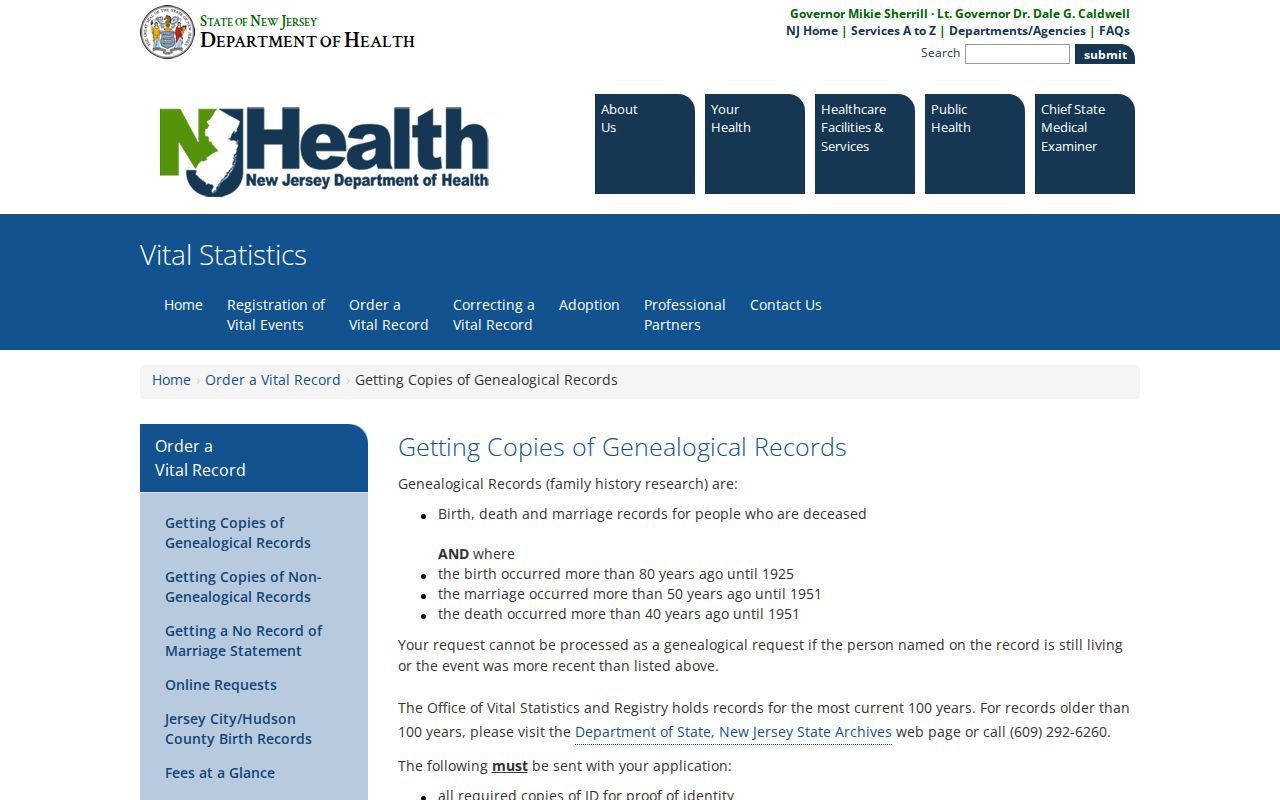
A local lead is only a starting point. The right route depends on the event's date and the type of request, so confirm custody before choosing between the state office and an archive.
Glassboro Names in Local Collections
Start local for old Glassboro names. The Gloucester County Historical Society holds the deepest collections around. Its shelves include city directories, telephone books, family files, church and cemetery material, probate files, funeral-home records, newspapers, and maps. Every-Name and Place indexes tie those pieces together. Newspaper coverage reaches Glassboro and nearby towns, so a county-wide notice can sit in a paper published outside the borough. Write down the title, issue date, page, and column. Label whether the item is an obituary, a notice, a club mention, or an advertisement.
Rowan University's Campbell Library adds another layer. Its University Archives and Special Collections hold yearbooks, graduation rosters, university publications, maps, manuscripts, photographs, and local glassmaking material. Those items can prove a dated institutional tie. They cannot pin down a current street address. The GCLS Glassboro Branch can point you toward current local-library resources, though its exact directory and obituary holdings are not listed publicly.
Older Glassboro research often outgrows the county. Vital records, deeds, probate files, court papers, newspapers, and name changes may rest with the New Jersey State Archives genealogical collections. Its published coverage shows which repository holds which records. Check it before mailing a request.
Custody Sources Need Glassboro Context
State custody records answer a narrow question. They tell you who is in prison, not who lives on a Glassboro street. The New Jersey Department of Corrections Offender Information system refreshes every two weeks. It holds back some records, and it drops a entry one year after the maximum sentence or maximum release date passes. Help material for the system lists searches by name and alias. It also lists case, commitment, county, facility, release, and sentence fields. None of that makes someone a resident. A county of commitment, a facility, or a release location only says where a case happened. It does not say the person lives in Glassboro.
Treat the state custody source as one thread among many. Its own update and retention warnings matter. They are essential context for any Glassboro resident lookup that touches it.
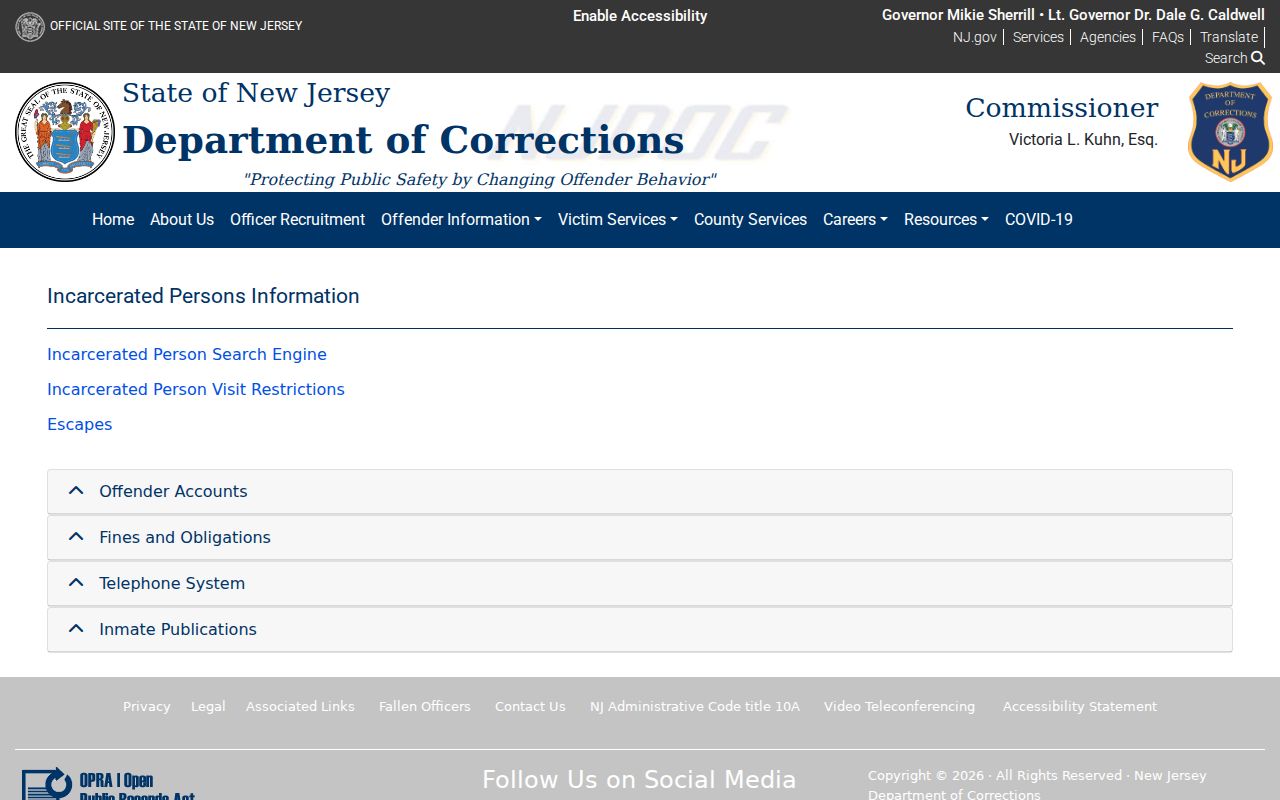
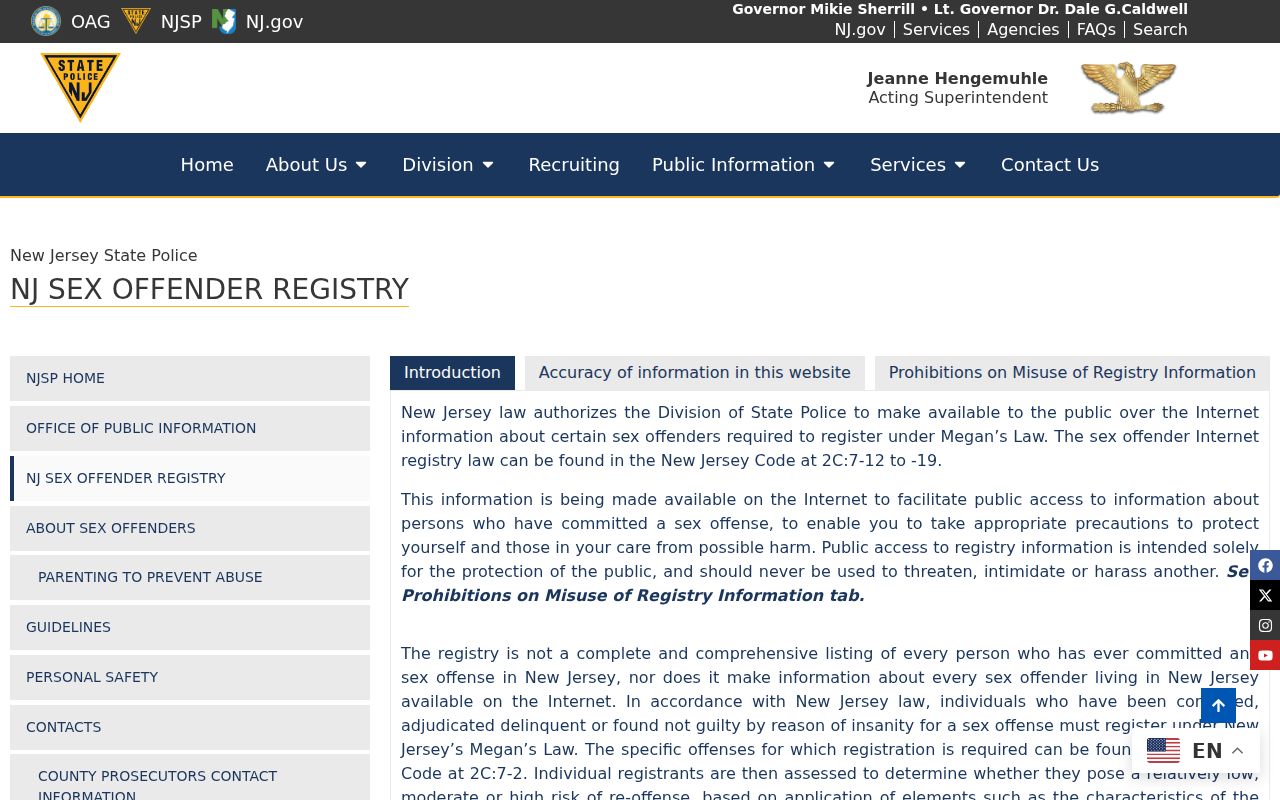
A second source sits apart from the custody system. The New Jersey State Police registry has a public scope set by statute. It also carries a misuse warning on its face. The registry covers high-risk Tier 3 registrants and some moderate Tier 2 registrants. Its live search controls do not display every filter up front. The registry's warning is blunt. It must never be used to threaten, intimidate, or harass anyone.
Keep that warning attached to the official registry page whenever a search leads there. It is a source-specific public record, not a general resident lookup for Glassboro.
Gloucester County Corrections handles administrative and bail functions. It publishes no public jail roster or name-search portal. Leave that gap open rather than filling it with a third-party list.
Glassboro Resident Lookup Limits
OPRA opens a process, not a guarantee. You can request identifiable government records, but custodians may redact exempt fields. Redactions cover Social Security numbers, signatures, driver-license data, and unlisted phone numbers. Protected addresses can also come out. Daniel's Law, P.L. 2021, c.371, can leave an index entry public while sealing the image or book. The Address Confidentiality Program offers a lawful substitute address. A missing address can signal protection, not error.
Certified vital copies require relationship, identity, and event details. Courts can seal, expunge, or restrict juvenile and family material. Voter-list rules exclude signatures and protected home addresses, and no public block-wide voter lookup exists. Respect the custodian's answer, and use the published correction route when a record needs review.
Lawful use. Use a Glassboro resident lookup for personal research, family history, reconnecting, civic questions, or source verification. Do not use records to stalk, harass, intimidate, or harm anyone.
Document a Glassboro Resident Lookup
Good notes make a weak lead testable later. Record the title, URL, custodian, and access date. Add the exact query, name spelling, address string, record identifier, date range, and any access limit. Say what you actually got: an index lead, an image, an official copy, or an archival reference. For addresses, log a confidence level. Do not assert more than the documents support.
Keep the labels strict. Use "high address association" only when a dated official record and an independent dated source agree on name, address, and parcel or organization context. Call it "moderate" when the match is consistent but incomplete. A "historical lead" still needs repository confirmation. A mailing address, business listing, court appearance, or organization entry earns "not a residence proof." That vocabulary keeps a Glassboro resident lookup honest instead of building a profile from fragments. Fragments are not a profile.
Note: Preserve both the historic address string and its normalized form, because a deed, directory, map, and later parcel record may spell the same place differently.